Premier Eby outlines plans for mental-health and addiction services amid complaints of ‘three-tiered system’

As the provincial government rolls out new details of its plans to expand mental-health and addiction services, it’s facing accusations of creating a “three-tier system.”

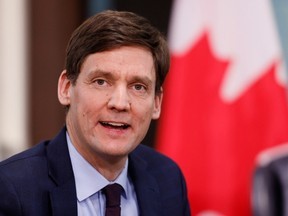
Premier David Eby said at a news conference Thursday that the B.C. government will create four new community recovery sites with aftercare support, as part of the $1 billion set aside in Budget 2023 to expand mental-health and addiction services that have been plagued by long waiting lists.

“People facing challenges with mental health and addiction need support. They need access to detox and treatment. They need access to recovery beds. And when they’re through that stage, they need aftercare supports, connection to things like housing, training, employment, so their recovery journey can be successful. It should be tailored to their unique needs,” Eby said.

He didn’t say where the new recovery sites would be located.

Budget 2023 sets out more than $1 billion in new funding over the next three years for mental-health and addiction services. It includes $586 million for 195 treatment and recovery beds throughout B.C. Of those, 100 will be at no cost to British Columbians.

Eby didn’t say whether the government planned to remove user fees for all mental-health and substance-use treatment beds, currently in the range of $45 a day. Critics say having fees on some beds but not on others creates an unfair system.

B.C. Liberal Leader Kevin Falcon said by not eliminating user fees on publicly funded beds, the province will have a three-tiered system.

“We’ve got private beds for those that can afford to pay, then we’ve got the public beds charging up to $45 a day. And then apparently these new ones are going to be free. And how do you decide which ones you’re going to be lucky or unlucky enough to receive?” Falcon said.

The budget also includes a new $171 million investment fund for Indigenous-led treatment, recovery and aftercare services.

Eby said the government is tracking waiting times so people can see the impact this funding will have on reducing the queue.

“Our goal obviously is to shrink those wait times, in some cases to zero, because when people have that moment of clarity with a serious mental-health or addiction issue, they want help. They need it right away,” he said.

The money will also be used to expand the Red Fish Healing Centre model of care across the province, though Eby didn’t say how much would be set aside for that.

The new Red Fish centre, located at the old site of the Riverview Hospital in Coquitlam, is the only facility in B.C. in which people can be certified under the Mental Health Act. Clients are referred there by health authorities if their mental stability and drug use are so complex that they’re unable to maintain treatments, housing or relationships.
Read the full article here….

Share:

More Posts

Voices for Public Health Care

Join the BC Health Coalition tomorrow for part 2 of their series “Voices for Public Health Care”. Click the image or scan the code to

Budget 2026

Budget 2026 and Rural Realities

Austerity measures were expected for Budget 2026 Key areas of interest and concern for Rural BC Lack of rural content and context BC Budget 2026

Family Day in BC

Today on Family Day, we are holding Tumbler Ridge in our hearts. Across rural and remote BC, we stand together with care, kindness, and connection.

Positive News for Rural Health

Holding Tumbler Ridge in our hearts As communities continue to process the tragedy in Tumbler Ridge, many people are carrying grief, fear, and uncertainty. In

Contact Us

This field is for validation purposes and should be left unchanged.