
Bringing Virtual Specialist Care Into Your Local Healthcare Team
By Paul Adams and Peggy Skelton
For rural, remote and Indigenous residents, access to specialist care often begins with a journey away from home. But what if a specialist could join you and your local healthcare provider in the same conversation, helping develop your care plan while you remain in your community?
That is the purpose of Consultation to Conversation, or C2C, a program within Real-Time Virtual Support (RTVS) at the Rural Coordination Centre of BC (RCCbc). It adds specialist expertise to your care team. It does not replace your local provider or remove the need for healthcare professionals in your community.
This distinction matters. After years of service reductions and centralization, rural residents understandably worry that virtual care might mean losing another person from their local healthcare system. C2C offers a way to bring an additional provider into that system, working alongside the people already involved in your care.
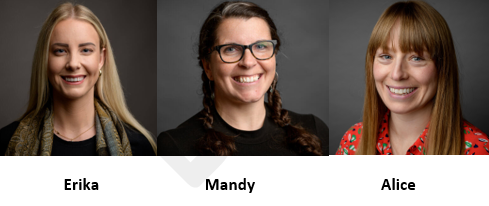
This month, the BC Rural Health Network is pleased to feature the RTVS team and its work to strengthen care close to home. We recently spoke with Senior Project Coordinator Erika Pritchard and Virtual Medical Office Assistant Mandy Hart, joined by RCCbc’s Director for Engagement and Outreach Alice Muirhead, about C2C and a new RTVS psychiatric case review series for rural healthcare professionals.
How a shared consultation works
C2C brings together a patient, their primary care provider and a specialist through a scheduled video consultation. Your family physician or nurse practitioner can ask questions, contribute knowledge of your circumstances and help develop a practical care plan with you and the specialist. You are part of that conversation. You can explain what concerns you, hear the advice directly and discuss what the recommendations would mean in your daily life. Your local provider can help clarify the next steps and identify what can realistically be arranged in your community. Ideally, the primary care provider participates throughout the appointment (up to an hour). Recognizing the demands on rural practices, the program can also accommodate a provider joining for the final five to 15 minutes to discuss the plan and answer questions.
A modified arrangement may involve a local nurse, pharmacist or allied health professional participating with the patient and specialist. The primary care provider is then brought into the discussion through consultation notes or a debrief. The connection to ongoing local care remains essential. Behind these appointments is considerable coordination. The dedicated C2C vMOA (Mandy) works with local clinic staff to match the availability of patients, providers and specialists. Medical office assistants are central to making this possible, particularly where visiting physicians and locums work changing schedules.
Keeping care connected
For many rural residents, the challenge is having to explain the same history repeatedly as providers come and go. A specialist consultation is most useful when the advice becomes part of an ongoing relationship and a shared understanding of what happens next. Mandy explained that consultation records are sent back to the referring clinic and physician. They are also made available through CareConnect, a clinical information system used by healthcare providers. Where further C2C appointments are appropriate, the team aims to maintain continuity with the same specialist.
These steps cannot solve every problem with disconnected medical records or gaps in local staffing. They do, however, help keep specialist advice connected to the people responsible for ongoing care. For us, that connection is one of the strongest reasons to support this approach.
Specialist expertise with a rural focus
More than 350 C2C consultations have taken place since the program’s relaunch in early 2025. The team described seven areas of support: cardiology, internal medicine, pediatrics, psychiatry, rheumatology, infectious disease and spinal cord injury navigation. Cardiology appointments are currently limited to patients in Northern Health.

Dr. Daisy Dulay (Clinical Lead)
Psychiatry has been focussed on adult ADHD diagnostic assessments with Dr. Betty Tang, but the team is now expanding. Starting in November, Dr. Yuebo Yang will be available for non-acute, non-urgent general psychiatry appointments.
The team is also in conversation with several other specialities, including adolescent psychiatry. As new C2C specialists are onboarded, the RTVS program will ensure to announce the changes and update the website and posters that are shared with rural providers.
How can I help?
Equally important is how C2C specialists approach the work. Erika described a “how can I help” approach grounded in kindness, compassion and cultural safety. RTVS offers learning opportunities that include community perspectives and cultural safety practices. Local knowledge matters because a recommendation must fit the services, supports and circumstances surrounding the person receiving it.
Reducing the burden of travel
A specialist appointment away from home can mean lost wages, accommodation costs, childcare arrangements and the need for someone to accompany you. Winter travel adds uncertainty. For people managing illness, disability or limited income, these demands can make accessing care exhausting before the appointment even begins. When a consultation can safely and appropriately take place virtually, avoiding that journey can make a meaningful difference to a household. Peggy reflected on her experience with earlier telehealth services and the value of helping people access care without travelling in severe winter conditions.
The C2C team collects feedback from patients, specialists, primary care providers and clinic staff. Patient surveys include questions about potential costs avoided by receiving care without travelling outside the community. We welcome that attention to patients’ experiences and expenses. We also want evaluation to examine continuity and health outcomes over time. Understanding what improves people’s lives helps communities and decisionmakers identify where these services can contribute most.
More support for mental health care
The new RTVS Psychiatric Case Review Series addresses another challenge familiar to rural healthcare teams: limited opportunities to discuss a patient’s care with a psychiatrist.
Led by Dr. Betty Tang, the pilot creates a space for rural providers to bring questions, explore an approach and learn from one another. It draws on the informal consultations that can happen when professionals work near one another in larger centres, making that kind of exchange more accessible to rural practitioners. Providers can submit a case for consideration, while nurses, allied health professionals, residents and other learners can register to listen and participate in the learning. These sessions are for healthcare professionals. Patients do not attend, and the sessions are distinct from C2C appointments involving a patient and their care team.
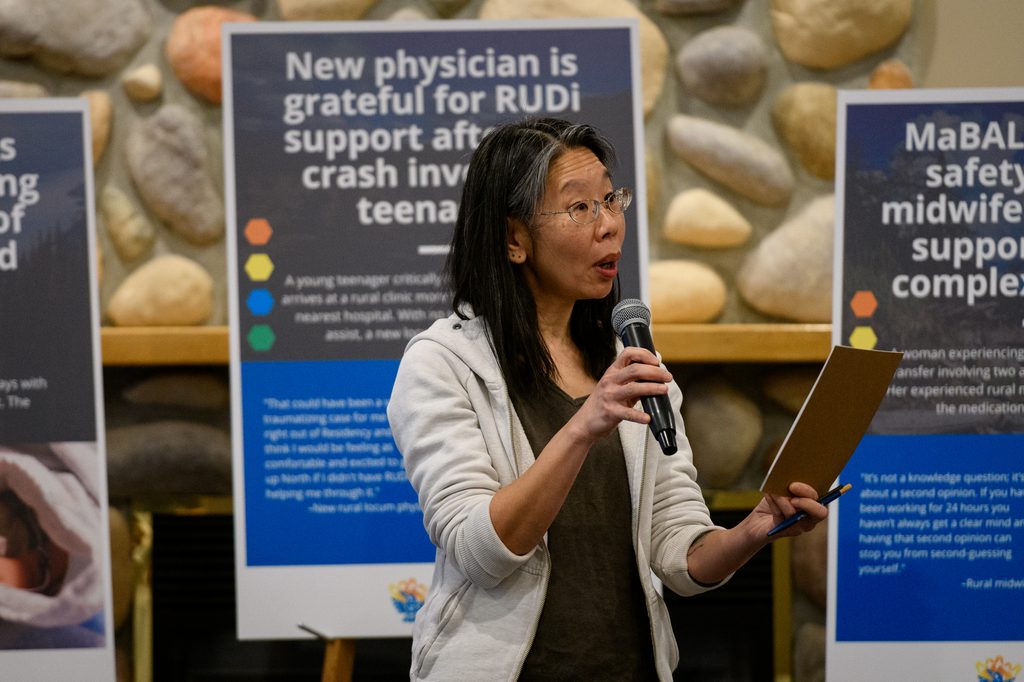
Dr. Betty Tang (Psychiatric Lead)
Peggy brought the perspective of a former registered psychiatric nurse and health services leader to this discussion. She emphasized how valuable specialist reassurance can be for providers supporting people with mental health needs in their own communities, including after someone returns home from treatment elsewhere. Supporting those local professionals can also help patients feel more secure in their care. The provider they know has an opportunity to draw on additional expertise, ask questions and build confidence in the approach being taken.
Peggy also sees this support as relevant to recruitment and retention. Rural practice can involve considerable professional isolation. Knowing there is someone to consult may help make that work more sustainable. For communities trying to keep healthcare professionals, strengthening the support around them deserves attention alongside the effort to recruit them.
The series is still developing. Interested professionals should contact the team for current session dates and registration details.
Helping more people benefit
C2C is accessed through your healthcare provider. It is not a service that patients can phone to book their own specialist appointment. If you think it could help you, ask your family physician or nurse practitioner whether a C2C consultation would be appropriate. There is also an important limitation: the team explained that C2C currently requires a primary care provider responsible for the patient’s ongoing care. People without that connection cannot currently access the program. That remains a significant gap for rural residents and reinforces the need to build local primary care alongside virtual specialist support.
Locum and visiting providers can use C2C, with appointments coordinated around their availability. Raising awareness among local clinic staff is therefore important. A service can only help when the people who could use it know it exists and understand how to arrange it. Virtual consultations will not suit every condition or every person. In-person assessment, hands-on care and travel to specialist services remain necessary in many circumstances. Our support for RTVS goes hand in hand with our advocacy for accessible, adequately staffed local services.
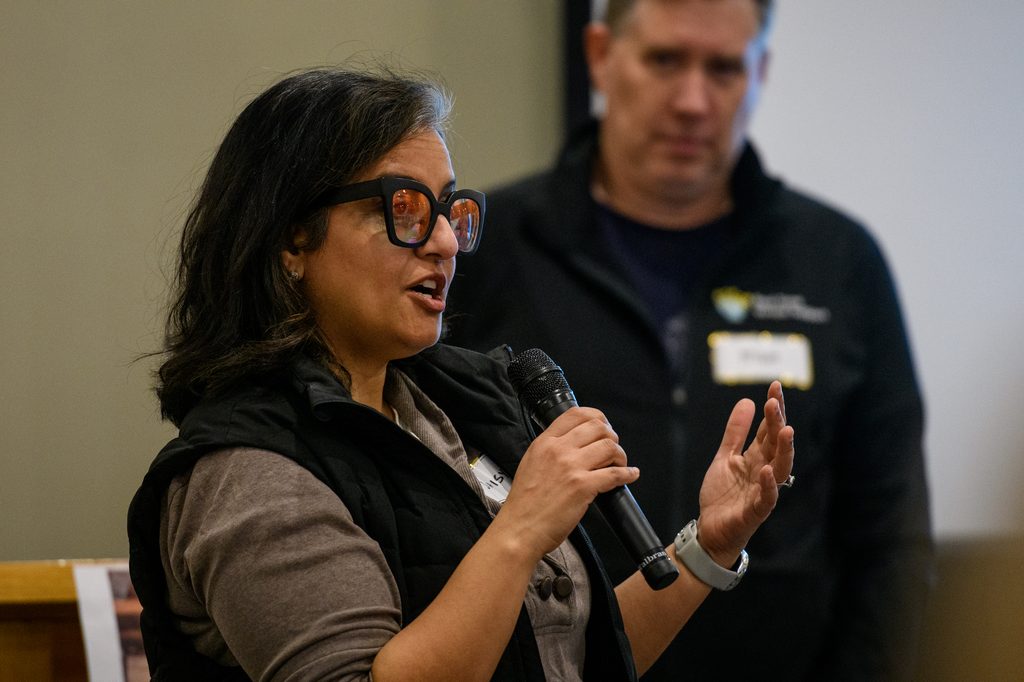
Dr. Daisy Dulay and Dr. Matt Petry (RTVS Retreat Parksville)
We thank the RTVS team for sharing its work and for helping rural providers access additional expertise. The principle at the heart of C2C is one we want residents to understand: your local healthcare relationship continues, with a specialist invited to support you and your provider. For rural and remote communities, that means more people contributing to your care, closer to home.
Learn more
Patients can ask/inform their primary care provider about C2C. Providers and clinic staff can contactc2c-moa@rtvs-bc.ca or visit rccbc.ca/initiatives/rtvs/c2c/.
Healthcare professionals interested in psychiatric case reviews can contact rtvscasereviews@rtvs-bc.ca or visit the RTVS Case Reviews page on the RCCbc website.
To learn more about other Real Time Virtual Supports available through RCCbc, please visit https://rccbc.ca/initiatives/rtvs/
Please share this article with your local care providers and healthcare teams.